
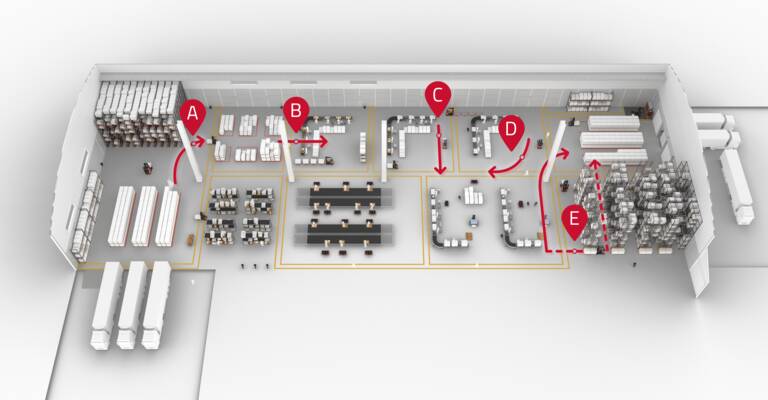
Adım adım otomasyon
Malzeme taşıma süreçlerinin otomasyonu; daha yüksek güvenlik, iş gücünün daha verimli kullanılması ve artan üretkenlik gibi birçok avantaj sağlayabilir.
Çözümlerimiz, ihtiyaçlarınıza uygun esnek bir yapı sunmak için doğru bileşenleri bir araya getirir. Aşağıda, sürecin her aşamasında otomasyonun nasıl çalıştığını keşfedin.
Toyota’nın “depoya yerleştirme” süreçlerine yönelik otomatik çözümü
Kısaca:
Akış:
Depoya yerleştirme alanında paletler, genellikle zemin tampon alanlarından oluşan mal kabul bölgesinden depolama alanına taşınır. Depolama alanı çoğunlukla zemin tampon alanı veya raf sistemlerinden oluşur.
Ekipmanlar:
Otomatik alçak kaldırmalı transpaletler (Toyota Autopilot LAE)
Otomatik istif makineleri (Toyota Autopilot SAE)
Otomatik reach truck’lar (Toyota Autopilot RAE)
Navigasyon: Reflektörlü veya doğal navigasyon
Yazılım: T-ONE otomasyon yazılımı
Görev başlatma: WMS, tablet, I/O
Entegrasyon: WMS, PLC, konveyörler, robot hücreleri, kapılar, yangın alarm sistemleri vb.
Akü: Otomatik şarj özellikli kurşun-asit veya lityum-iyon akü
Ek özellikler: Barkod tarama, format kontrolü
Toyota’nın İsveç’teki fabrikasında gelen ürünlerin otomatik olarak depoya yerleştirilmesi
“Toyota’nın Kaizen felsefesi, her şeyi bir anda değiştirmeyi beklemek yerine küçük ama sürekli iyileştirmelerle ilerlemeye dayanır.”
Mikael Egonsson, TMHMS TPS Koordinatörü
Gelen ürünlerin elleçlenmesi
Gelen ürünler genellikle zeminde, hatlar hâlinde yerleştirilir; bu alanlar derin istif alanları olarak da adlandırılır. Bu zemin tampon alanları çoğunlukla kamyon sürücüleri veya yükleme rampası personeli tarafından doldurulur.
Toyota’nın Autopilot AGV çözümü, gelen ürünleri mal kabul alanından alarak depolama alanına otomatik şekilde yerleştirebilir. Bu depolama alanı genellikle bir raf sistemi veya zemin tampon alanından oluşur.
Depoya yerleştirme süreçlerinde, her görev için en uygun ekipman tipinden yararlanmak amacıyla taşıma operasyonu birden fazla araç tarafından gerçekleştirilebilir. Örneğin taşıma işlemi için otomatik alçak kaldırmalı bir transpalet, depolama işlemi için ise bir reach truck kullanılabilir. Böylece her uygulama için en uygun ekipman çözümü sağlanır.
Görselde tipik bir yük alma istasyonu gösterilmektedir: zemin tampon alanı (bazı uygulamalarda konveyör).
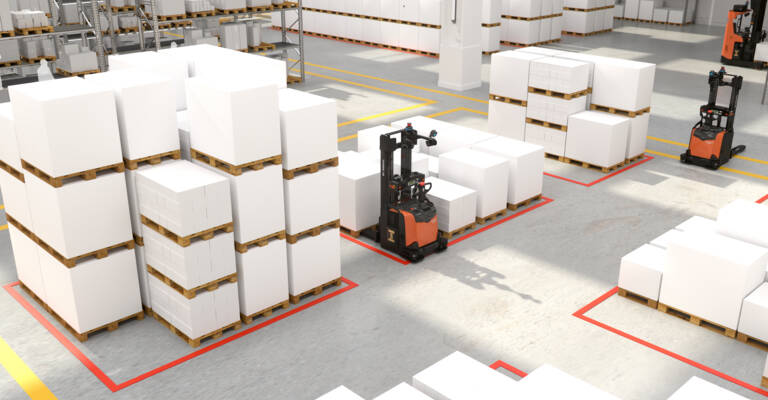
Nasıl çalışır?
Taşıma görevleri çoğunlukla yükleme alanı sorumlusu tarafından, T-ONE’a bağlı bir tablet veya bir buton aracılığıyla başlatılır. Autopilot yükü aldıktan ve araç üzerindeki tarayıcı ürün kimliğini doğruladıktan sonra T-ONE, varış noktasını Depo Yönetim Sistemi’nden (WMS) alır.
WMS bulunmayan tesislerde ise T-ONE, varış noktası eşleştirme özelliği sunar. Bu özellik sayesinde T-ONE, yük üzerinden taranan değeri önceden tanımlanmış veriler ve kriterlerle karşılaştırarak doğru bırakma noktasını belirleyebilir. Varış noktasının önceden sabit olarak tanımlanması gerekmez; örneğin sabah ve öğleden sonra için farklı bırakma noktaları belirlenebilir. Bu da operasyonunuza özel kurallar oluşturma konusunda yüksek esneklik sağlar.
Sorunsuz yük elleçleme
Gelen ürünlerin sorunsuz şekilde alınabilmesi için yüklerin doğru şekilde konumlandırılması büyük önem taşır. Bu nedenle, ürünler depolama alanına yerleştirilmeden önce paletlerin konumunun görsel olarak kontrol edilmesini ve ürünlerde herhangi bir hasar olup olmadığının tespit edilmesini öneriyoruz.
Çalışanların ve kamyon sürücülerinin eğitilmesi, bu sürecin iyileştirilmesine ve otomatik operasyonların daha kesintisiz ve verimli şekilde yürütülmesine yardımcı olabilir.
Görselde tipik bir bırakma istasyonu gösterilmektedir: zemin tampon alanı, geleneksel veya yerçekimli akış raf sistemi ya da shuttle depolama sistemi (RS150 ve RAE).
Toyota’nın “stok yenileme” süreçlerine yönelik otomatik çözümü
In short:
Flow: In production sites or warehouses there is always a need for replenishment of material such as pallets with parts that are taken to the production lines or picking areas that are restocked
Vehicles:
Automated towing trucks (Toyota Autopilot TAE )
Automated stacker trucks (Toyota Autopilot SAE)
Automated reach trucks (Toyota Autopilot RAE)
Navigation: Reflector or natural navigation
Software: T-ONE automation software
Order initiation: WMS, tablet, I/O, PLC
Integration: WMS, PLC
Battery: Lead-acid or Li-ion with auto charging
Add-ons: Barcode scanning
Automated production replenishment improves job satisfaction at Hargassner
“Toyota Material Handling has not only developed the best concept tailored to our needs, but has also proven to be a very reliable partner during the implementation.“
Florian Pommer, Operations Manager at Hargassner
Automated refilling of parts
The replenishment process is typically found in production sites, at assembly lines or in picking/kitting areas, where you need to refill parts. Pallets are picked up by Toyota Autopilots from floor buffers or racking in the storage area and taken to the production or picking areas.
A single pallet can be transported by an automated forklift truck, or a number of pallets can be towed at the same time by an automated tow tractor. Around busy areas, such as assembly lines, forkless solutions are a good alternative for smooth and safe pallet transport.
The image shows a typical pick-up station: floor buffer, conventional or gravity-flow racking, shuttle storage (RS150 with RAE).
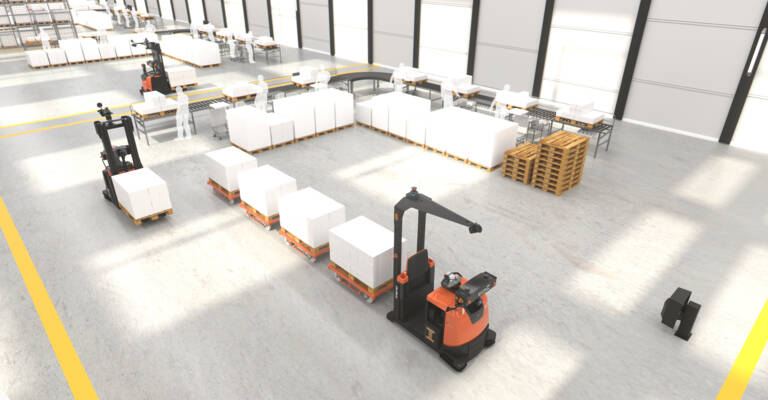
How it works
For each replenishment task, the T-ONE automation software creates two transport orders. It combines the “point-to-point” and “empty pallet handling” flows: first taking away the empty pallet and then replenishing it with a full pallet. It can also start a loop transport with an automated tow tractor. You have the flexibility to choose between your machines’ Programmable Logic Controller (PLC) system or WMS to initiate these transport orders. You can also have an operator to initiate them via a tablet or a connected button.
In the image you see a typical drop-off station: work stations in production, racking.
Toyota’s automated solution for “point-to-point transport”
In short:
Flow: Where pallets are moved, there are often simple transportations from one specific station to another specific station. In distribution centres where pallets are directly transported from inbound to outbound this is called cross-docking
Vehicles:
Automated low-lifters (Toyota Autopilot LAE)
Automated stacker trucks (Toyota Autopilot SAE)
Navigation: Reflector or natural navigation
Software: T-ONE automation software
Order initiation: WMS, tablet, PLC, I/O
Integration: WMS, PLC, conveyors, robot cells, doors, fire alarm
Battery: Lead-acid or Li-ion with auto charging
Add-ons: Barcode scanning
Cross docking by AGVs helps DSV to level their workflow and resources
“The Autopilots boost DSV’s productivity by handling up to 400 pallets per shift, compared to a capacity of 250 pallets by a human operator"
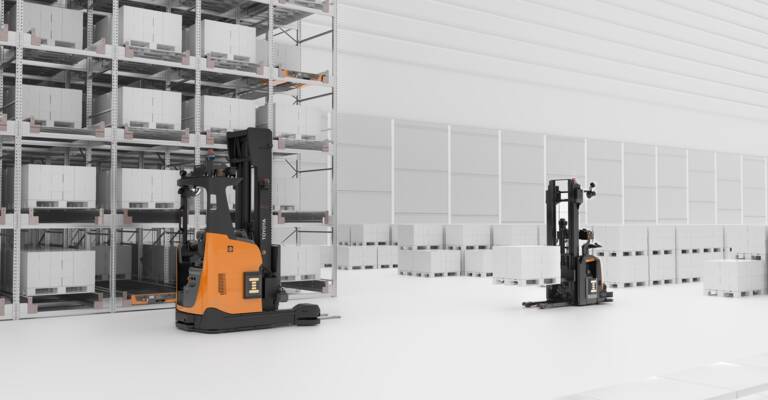
Moving goods
The point-to-point process can be found in most production sites where semi-finished goods need to be transported within the production area until they are finished. Our Autopilots can take care of the transport of the semi-finished goods between conveyors or floor buffers, for example.
How it works
The tasks are often started automatically by a logical input signal, e.g. by a photocell fixed at the conveyor that’s triggered by the load as it approaches the end of the line. It can also be initiated manually via a tablet or the WMS.
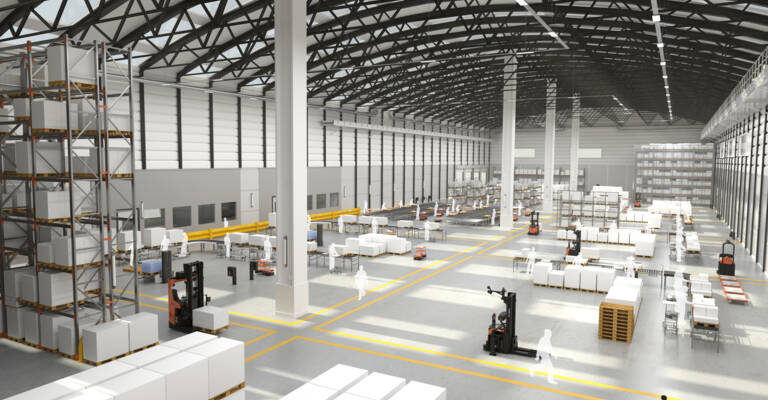
The takt time is not always equal within a production and therefore smaller buffers might be needed to store the semi-finished goods from time to time. T-ONE, Toyota’s automation software, will identify this need and create a temporary storage position where the Autopilots can safely place your goods. When needed, the system will send a new transport order to one of the automated vehicles to finish the “point-to-point transport” – optimising the solution to your needs.
Flexible cross-docking
In distribution centres these types of transports are often referred to as “cross-docking” flows, where goods are directly moved by Autopilots from inbound buffers to the outbound area, typically placed in deep stack buffers waiting to be shipped.
Toyota’s automated solution for “empty pallet handling”
In short:
Flow: In a warehouse or manufacturing site, there are always a lot of empty pallets as goods have been used or picked. Empty pallets are also needed to place picked items or finished goods from the production on
Vehicles:
Automated low-lifters (Toyota Autopilot LAE)
Automated stacker trucks (Toyota Autopilot SAE)
Navigation: Reflector or natural navigation
Software: T-ONE automation software
Order initiation: WMS, tablet, PLC, I/O
Integration: WMS, PLC, conveyors, robot cells, doors, fire alarm
An automated stacker takes care of the empty pallet handling at Haval
“I am convinced that the payback time will be shorter than the calculated 20 months. I just see that people work more effectively and we have less damage. "
Roel van Dijk, supply chain manager at Haval
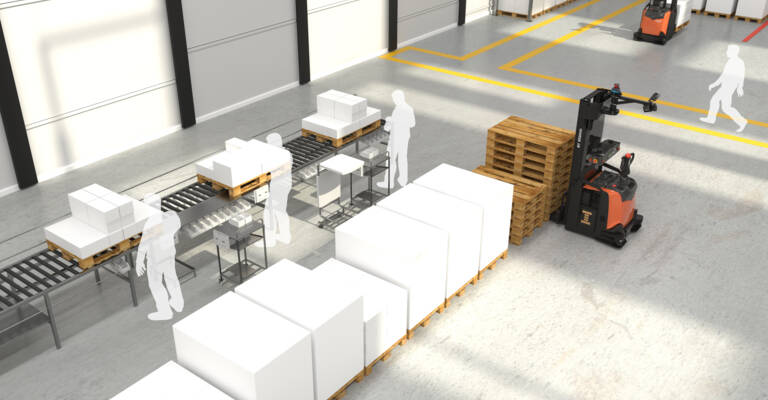
Moving empty pallets throughout your site
The empty pallet handling process is found in most operations where material has been replenished such as at assembly lines, picking or kitting areas or where waste needs to be handled.
How it works
Your empty pallets can be either taken by automated vehicles one by one from the assembly/picking/kitting station to a pallet dispenser; or empty pallets are brought to production for loading of finished goods. Another way to apply empty pallet handling in your operation is to have a pile of pallets, commonly stacked manually, transferred by an AGV from a floor buffer in a production area to another floor buffer at the empty pallet storage.
Automatically or on demand
You can choose to have the transport orders for this type of flow initiated by the machines’ PLC system or the Warehouse Management System. Alternatively, an operator can initiate them via a tablet connected to Toyota’s automation software (T-ONE), or a button.
In the image you see a typical pick-up and drop-off station: floor buffer, scrap station.
Toyota’s automated solution for “finished goods to outbound”
In short:
Flow: Pallets with finished goods are picked up at a temporary storage or the wrappers close to production or picking areas, and dropped off at the outbound area, typically floor buffers or deep stacks, waiting to be loaded into lorries
Vehicles:
Automated low-lifters (Toyota Autopilot LAE)
Automated stacker trucks (Toyota Autopilot SAE)
Automated reach trucks (Toyota Autopilot RAE)
Navigation: Reflector or natural navigation
Software: T-ONE automation software
Order initiation: WMS, tablet, PLC, I/O
Integration: WMS, PLC, doors, fire alarm
Battery: Lead-acid or Li-ion with auto charging
Add-ons: Barcode scanning
AGVs move goods to the outbound in routes freely in the middle of a swarm of manual forklift at Grocery retailer Coop
“We observed a total of 17,500 A-to-B transports a week that could be automated, and started by automating 3,000 of them."
Roger Tømmervold, Internal Logistics Manager at Coop
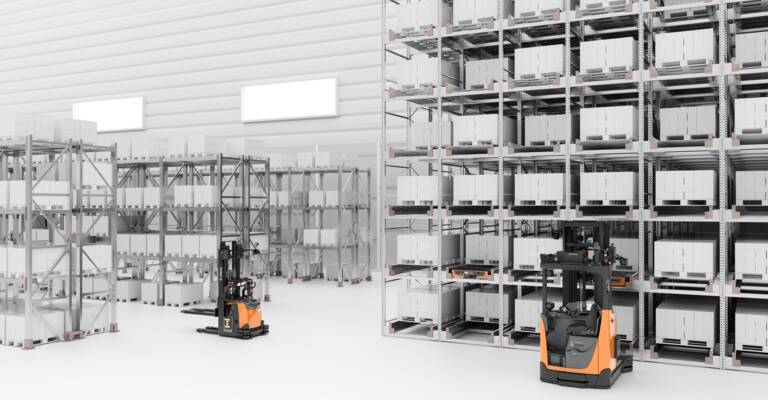
Getting ready to deliver
When products are produced and finished, automated vehicles can pick up the goods at the final station such as the end of a production line, a conveyor or directly at a production machine. When wrapping is required, the Autopilot will bring the goods to a wrapping station and then to the outbound area.
Storing of goods
The pallets may go straight away in the outbound buffer waiting to be shipped, but often they are stored for some time before being dispatched. When goods are brought to the storage, there’s in some cases a goods handover between machines, handled by a multileg order, to use the most suitable machine for each task. When produced in batches, automated forklifts will place the goods in gravity or shuttle racking. For non-batched goods conventional racking is common. Thanks to the wide range of solutions there’s always a perfect fit for your operations.
In the image you see a typical intermediate station: conventional or gravity-flow racking, shuttle storage (RS150 with RAE).
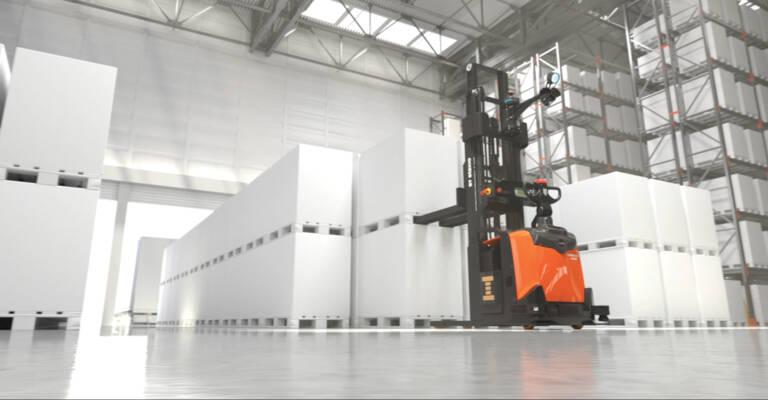
How it works
Orders to bring your goods to the outbound or storage are usually initiated automatically by an I/O signal e.g. a photocell or a scanner triggered by the load as it approaches the end of a conveyor. The task can also be given automatically by your production machines’ PLC system or manually by an operator via a tablet. The destination is decided by our automation software T-ONE either together with the WMS or via the destination mapping feature that can send a scanned value to a specific destination.
The image shows a typical drop-off station: floor buffer.
Read more about our shuttle operation >>
Contact us

Contact us
First name Last Name
Logistics Solutions Manager
+12 345 6789
firstnamelastname@toyota-industries.eu